

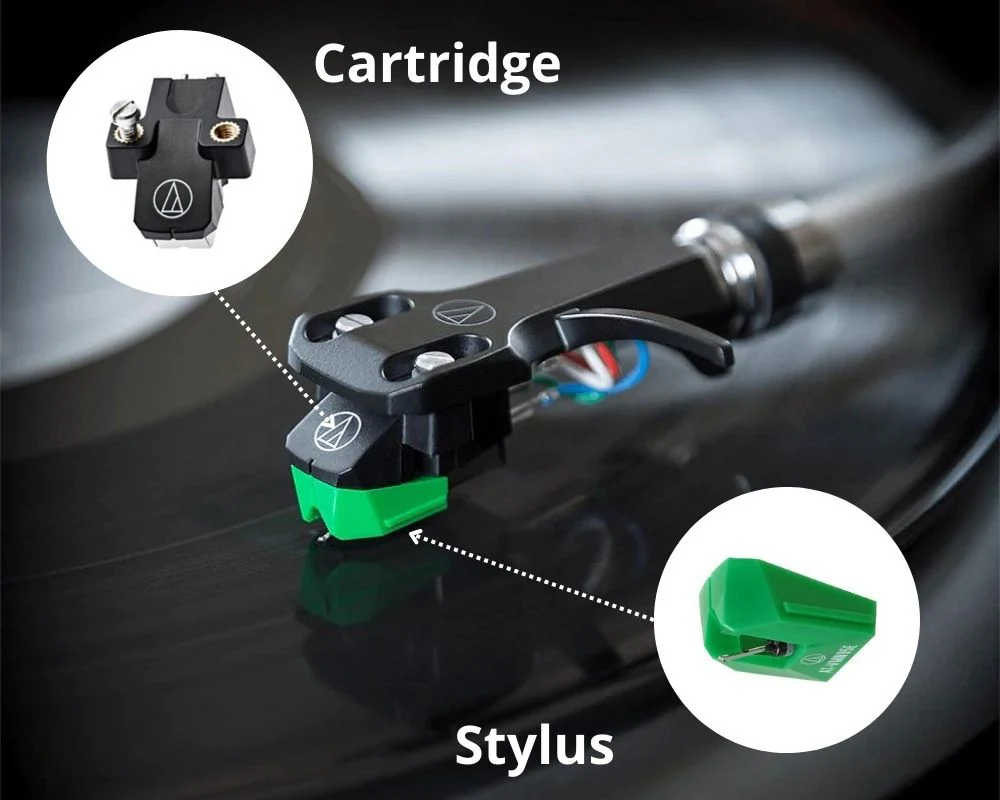
The record player needle, also known as a stylus, is the small but crucial component that sits at the end of the cartridge. It tracks the grooves of your vinyl record and converts vibrations into sound.
Most modern styli are made from:
Without a properly functioning stylus, your records can sound distorted — and worse, get permanently damaged.
Replacement depends on usage and stylus type:
If ignored, a worn stylus can permanently damage your vinyl collection.
How to Identify Your Cartridge Model
Before buying a replacement stylus, you must know your cartridge model.
⚠️ Important: The stylus must match the cartridge — not just the turntable brand.
For example:
This is how much weight presses the stylus into the record groove.
Too light:
Too heavy:
Most cartridges track between 1.5g – 2.5g.
Prevents the tonearm from pulling inward.
It should usually match your tracking force setting.
If you’re unsure, refer to your cartridge specs.
Beyond audible distortion, microscopic wear occurs at the contact edges of the stylus tip. As the diamond flattens:
Advanced wear can cause permanent groove deformation.
Most consumer turntables use Moving Magnet (MM) cartridges. These typically allow easy stylus replacement.
Moving Coil (MC) cartridges often do not have user-replaceable styli. In these cases:
Brands like Audio-Technica and Ortofon manufacture both MM and MC models.
Always confirm cartridge type before purchasing a replacement.
Each cartridge has a recommended tracking force range, typically printed in grams (g).
Example ranges:
Tracking too light:
Tracking too heavy:
Precise adjustment using a stylus force gauge improves accuracy.
Proper alignment ensures the stylus sits correctly in the groove.
Key factors include:
Misalignment leads to:
Cartridge alignment protractors are used for precise setup.
Dust, debris, and groove contamination act like abrasive particles. Playing dirty records:
Wet cleaning systems or anti-static brushes reduce contamination.